
There has been a 45 per cent growth in 'active internet users' in rural India since 2019, according a study by Nielsen, a global company for audience measurement, data and analytics. The Bharat 2.0 Internet report said that female active internet users grew by 61 per cent since 2019. The report said that India has 646 million active Internet users aged 2 years and above as of December 2021. Rural India has 352 million internet users--almost 20 per cent higher than urban.

Nokia is one of the leading telecom equipment manufacturing companies in India

The telecom sector is in the midst of another major shift as voice gives way to data.

From real estate to metals, what Sitharaman's Budget has in store.

Pichai said a whole new generation of technologies are happening in India first, and that people in the country no longer have to wait for technology to come to them. Investments, he said, will focus on four areas key to India's digitisation, including enabling affordable access and information for every Indian in their own language, be it Hindi, Tamil, Punjabi or any other.

People familiar with the proceedings said independent cybersecurity experts from a private consulting firm, technology lawyers, government officials and WhatsApp representatives were asked questions about the Pegasus spyware and the larger issues surrounding surveillance, hacking and remedial measures.

India can potentially have 40 million 5G users in the first year when the next-generation service is made available to them, a report released by telecom company Ericsson said on Wednesday. According to Ericsson ConsumerLab report, consumers have shown willingness to pay 50 per cent more for 5G plans bundled with digital services while they want to pay only 10 per cent more for just 5G connectivity. The data collected from 26 countries in December 2020 for the report shows that consumers across several markets are willing to pay 20-30 per cent more on an average for 5G plans bundled with digital service use cases.

Reliance Retail Ventures Ltd, run by India's richest man Mukesh Ambani, on Tuesday raised Rs 5,512.50 crore from Abu Dhabi Investment Authority (ADIA), taking the total fundraise to Rs 37,710 crore in less than four weeks.

'We showcased about 20 use cases in 5G trials in Pune and Gandhinagar and some of them were interesting and innovative.' 'However, which ones will take off and which ones would not be relevant, we don't know yet.'

The government holds 90 per cent stake in ITI which is valued at Rs 7,550 crore.

Before the pandemic hit the world and led to shutdowns, the company had received nearly half a dozen offers. But bidders are now withdrawing. They want to reassess the situation. They want to conserve cash and avoid acquisition.

Although the industry is disappointed with the government decision not to lower spectrum prices at a time telcos are saddled with over Rs 4-trillion debt and an estimated Rs 1.43-trillion licence fee dues, the DCC has relaxed the payment structure to offer some relief to the financially stressed sector.

India has now around one billion mobile subscribers, he added.

Facebook co-founder and CEO Mark Zuckerberg on Tuesday said India is a very special and important country with a remarkable entrepreneurship culture, as he sought to push deeper the just-launched payments services that allow users to make payments over WhatsApp. Last month, Facebook-owned WhatsApp received approval from the National Payments Corporation of India (NPCI) for rolling out its payments services in India. In 2018, WhatsApp started testing its UPI-based payments services in India -- a global first -- with about a million users.

'Remote Working/Work from Home' strategy has been activated to aid social distancing in the impacted regions. Travel advisory across the organisation has been issued with full precautionary measure.

Refuting the allegations of TRAI that the telecom service providers are making huge gains in the sector, the firms had said they have been investing hugely on the infrastructure.

The Indian Railways is replacing its outdated signalling system with the latest automated train protection technologies - European Train Control System and Train Collision Avoidance System.

Companies have activated a comprehensive pandemic response plan with requisite risk mitigation protocols for keeping networks working as telecom is an essential service.

Nifty crosses 9,750-mark; Bharti Airtel, TCS, Wipro, Lupin and Coal India gained the most on BSE Sensex
Reliance Industries Ltd, the nation's most valuable company, on Thursday said it has raised $4 billion (around Rs 30,000 crore) in debt through the largest ever foreign currency bond issuance by an Indian entity. The oil-to-telecom conglomerate plans to use the proceeds of the three tranche issues to retire existing borrowings. The issue was "nearly 3 times oversubscribed with a peak order book aggregating around $11.5 billion," the company said in a statement. This is the largest ever foreign currency bond transaction in India, eclipsing ONGC Videsh Ltd's $2.2 billion US dollar bonds issue of 2014.

The Telecom Commission, which is the highest decision making authority within the Department of Telecommunications, on Wednesday, accepted the recommendations of the Telecom Regulatory Authority of India on full-fledged mobile number portability.

'Large-caps are better placed to withstand the impact of higher input cost inflation, rising rates and withdrawal of excess global liquidity.'

"I do not think there is any self-imposed deadline for action, but I think we are looking at weeks, not months," White House Chief of Staff Mark Meadows told reporters aboard Air Force One, flying with President Donald Trump form Atlanta.

While the company will gain from enhanced scale and size following the merger with Mahindra Satyam, its ability to bag large deals will be a key growth driver.

Reliance Industries, which holds pan-India 4G telecom spectrum for data services, has applied for a licence to offer mobile telephony.

Make no mistake, Reliance's entry into Indian e-commerce cannot be taken lightly. It is akin to a combine of AT&T and Wal-Mart challenging Amazon on its home turf, says Shailesh Dobhal.

Reliance Industries will by 2030 create or enable capacity to generate at least 100 gigawatts of electricity from renewable sources, which can be converted into carbon-free green hydrogen, its chairman Mukesh Ambani said Friday as he outlined a 1-1-1 vision to bring down the cost of hydrogen to under $1 per 1 kg in 1 decade. The focus on generating electricity from renewable sources of energy such as solar and wind -will help cut carbon emissions in the world's third-largest greenhouse gas emitter. The same electricity, when converted into green hydrogen, can replace petrol and diesel in automobiles and other fuels in the industry, helping cut down on the use of fossil fuels, carbon emissions and reduce import dependence.

The freebies are now over, but Jio will need to notch up subscriber numbers and margins to prove its sceptics wrong.

'We have already sanctioned loans worth over Rs 3,000 crore to around 120,000 customers.'

Mobile Number Portability (MNP) has crossed a landmark figure of 100 million with 11 per cent of the total mobile subscribers exercising this facility till date.

Till now the telecom companies can share only passive infrastructure such as towers. In active infrastructure the players would be able to share antenna and mobile exchanges among others.
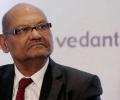
A reception often reserved for rockstars came the way of mining mogul Anil Agarwal when he started revealing nuggets of his ascent from a scrap-metal dealer to one of India's most prominent self-made industrialists on social media. And now he has been flooded with booking writing proposals and has even been offered money for a biopic. In February this year, Agarwal, 68, started tweeting his journey from Bihar to Mumbai first and then to London to head a globally diversified natural resources company with interests in zinc-lead-silver, iron ore, steel, copper, aluminium, power, oil and gas.

India is looking at 5G technology as a major opportunity in terms of offering services tailored for rural India like telehealth, tele-education and bandwidth-heavy applications
Indian telecom operators came out in open support of Chinese equipment makers, saying the government cannot deprive Indian consumers of the cutting-edge technology which these companies offer by denying security clearance to them.

India's largest telecom operator in terms of subscriber numbers has been struggling to raise its share of subscribers in the market for fourth-generation technology services.

'It is in electronics that the gap between where we are and where we need to be is most obvious and most persistent.' 'It is not only a national security issue, but also a commercial issue,' argues Rajeev Srinivasan.

Mid- and small-cap indices have outperformed the frontline benchmarks - the S&P BSE Sensex (up around 10 per cent) and the Nifty50 (13 per cent) - in the first half of calendar year 2021 (H1-CY21) by rallying 26 per cent and 39 per cent, respectively. The trend, analysts believe, is likely to continue in H2-CY21 as well. The outperformance in H1-CY21 comes on the back of improved earnings and strong inflows from the foreign portfolio investors (FPIs) in Indian equities. However, good monsoon so far, gradual opening up of the economy and the pick-up in the pace of vaccination provides support to the market.

Together, AT&T and TechM aim to improve the agility in rolling out and supporting networks of the future, while improving returns on investment through technology-led transformation.

The world's biggest social network Facebook wants to connect more people to internet in India which accounts for the third largest online user base globally after China and the US but has a very low internet penetration growth rate.

The officials said Pakistani intelligence operatives have adopted the modus operandi of investing in illegal call exchanges that switch Voice over Internet Protocol (VoIP) calls to normal Indian mobile calls.
